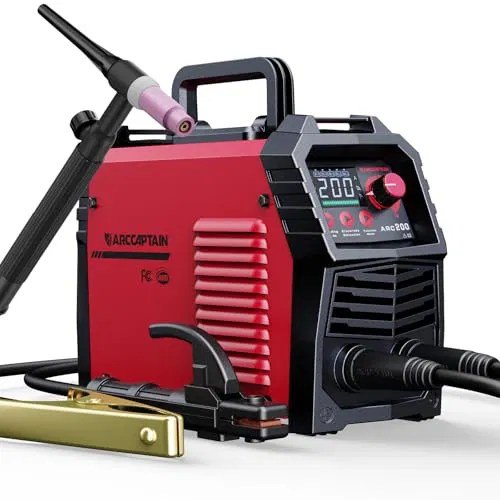
Tough jobs often demand power and welding capabilities far from any wall outlet. When you're out in the field, on a remote construction site, or tackling farm repairs, having the right equipment isn't just convenient—it's essential for getting the job done efficiently and reliably. That's where Choosing the Right Hobart Welder Generator comes into play. These robust machines are renowned for their ability to deliver both portable welding power and auxiliary electricity, making them a go-to for professionals and serious hobbyists alike.
At a Glance: Picking Your Hobart Welder Generator
- Assess Welding Needs: Determine amperage for stick, MIG, or TIG and material thickness.
- Calculate Auxiliary Power: How many watts do your grinders, lights, or plasma cutters need?
- Consider Portability: Will it stay in one spot or travel frequently? Look for wheels and handles.
- Prioritize Durability: Hobart machines are built tough; check engine type and frame construction.
- Factor in Maintenance: Easy access to service points saves time in the long run.
- Look for Key Features: Electric start, fuel gauges, and hour meters add convenience.
Why Hobart Stands Out in the Field
When the stakes are high and reliability is non-negotiable, Hobart welder generators consistently rise to the occasion. Their reputation is built on delivering durable, high-performance machines designed to withstand the rigors of demanding environments. Whether you're mending heavy machinery, erecting structural steel, or simply need power where there is none, a Hobart unit is often the dependable workhorse you can count on. They seamlessly combine the punch of a professional-grade welder with the utility of a robust generator, offering a singular solution for complex mobile tasks.
Understanding Your Workflow: The Core Questions
Before you dive into model specifics, take a moment to consider your typical projects. The "right" Hobart isn't just the most powerful or feature-rich; it's the one that perfectly aligns with your specific demands.
What Are You Welding?
Your primary welding tasks will dictate the necessary amperage and welding process capabilities.
- Material and Thickness: Are you primarily stick welding heavy steel plate for structural work, or perhaps doing lighter fabrication with sheet metal? Thicker materials demand higher amperage. While most Hobart welder generators excel at stick welding, some models are also set up for scratch-start TIG, and with the right accessories, many can handle MIG welding.
- Process Versatility: Do you need the flexibility to switch between processes? If you're tackling varied tasks, a machine that supports multiple welding types will be a significant advantage.
What Auxiliary Power Do You Need?
A welder generator's "generator" side is just as important as its welding output.
- Tool Requirements: List all the power tools you might run simultaneously – grinders, drills, chop saws, plasma cutters, air compressors. Add up their wattage to ensure the generator can handle the combined load without tripping breakers or straining the engine. Hobart models typically offer 7,000 to 13,000 watts of surge power, with continuous outputs around 10,000 to 10,500 watts, providing ample juice for most job site demands.
- Lighting and Other Amenities: Don't forget basic job site necessities like floodlights or charging stations. Ensure your chosen unit has enough receptacles and wattage to keep everything powered.
Where Are You Working?
The environment and frequency of transport heavily influence your portability needs.
- Stationary vs. Mobile: Will your welder generator live on a welding rig, moving from site to site daily, or will it mostly stay in a workshop with occasional moves? If frequent transport is the norm, features like integrated wheel kits, robust lift points, and a compact footprint become crucial.
- Environmental Toughness: Hobart machines are designed with rugged construction, often featuring steel frames and reliable engines (like Kohler or Briggs & Stratton) to shrug off dirt, dust, and the occasional bump. Consider advanced cooling systems if you work in hot climates or for extended periods.
How Often Will You Use It?
The intensity of your usage impacts the durability and maintenance considerations.
- Duty Cycle: While Hobart machines are built for consistent performance, understanding the concept of duty cycle (how long a welder can operate at a given amperage within a 10-minute period) helps manage expectations for continuous, heavy use.
- Maintenance Commitment: Regular maintenance is vital for any engine-driven machine. Hobart units are typically designed for straightforward access to service points, making tasks like oil changes, filter replacements, and spark plug checks relatively simple. If you anticipate heavy use, a machine with easy maintenance access will save you time and headaches.
Hobart's Powerhouse Lineup: A Closer Look at Key Models
Hobart offers a range of welder generators, each tailored for specific needs and applications. Let's break down some of their most popular options.
Hobart Champion Elite 225: The Versatile Workhorse
The Champion Elite 225 stands as a testament to versatility and power. This unit typically boasts a 225-amp DC welder, perfect for robust stick welding and capable of scratch-start TIG welding. Beyond its impressive welding output, it features a substantial 11,000-watt generator, often powered by a reliable Kohler gas engine. This combination makes it a favorite for diverse applications, from running demanding tools like grinders and plasma cutters to lighting up an entire job site. It’s an ideal companion for construction crews, farm maintenance, and mobile repair services needing both welding and significant auxiliary power.
Hobart Engine Driven Generator/Welder (40 to 145 amps): Portable Precision
For those lighter to medium-duty tasks that require mobility and convenience, Hobart offers a range of engine-driven units with welding outputs from 40 to 145 amps DC. These machines are engineered for portability, making them incredibly easy to transport to various locations. Powered by robust gasoline engines, they deliver steady output for jobs like light fabrication, general maintenance, and emergency repairs where a full-scale industrial unit would be overkill. They are perfectly capable of powering essential tools and lights while you weld, providing true independence from grid power.
Hobart DIN Plasma Cutter Welder Gas: The Cutting Edge
For professionals who frequently need to cut metal as well as weld it, the Hobart DIN Plasma Cutter Welder Gas model is a game-changer. This unit integrates a gas-powered engine with both welding capabilities and a built-in plasma cutter. The ability to seamlessly switch between cutting and welding tasks on-site dramatically boosts efficiency. Its strong engine ensures reliable performance for both functions, making it an invaluable asset for specialized mobile fabrication and repair where metal shaping is a regular requirement.
Hobart TS 239168: Focused on Finesse
When precise control over your welding arc is paramount, the Hobart TS 239168 shines. This model features a 150-watt rheostat, allowing for incredibly accurate amperage control. This level of precision is crucial for welding various metal thicknesses and achieving high-quality beads. It reliably handles both welding and auxiliary power needs simultaneously, ensuring that while you dial in that perfect weld, your essential tools or lights remain fully powered without a hiccup.
Hobart TS 225A: Power and Arc Stability
The Hobart TS 225A is celebrated for its dual-voltage power output, offering both 110V and 220V. This versatility ensures you can power a wide range of tools and accessories. As a welder, it provides reliable power for stick welding across a substantial amperage range, from light to heavy-duty tasks. Users consistently praise its smooth arc starts and stable arc performance, which translates directly into cleaner, more consistent welds. It's a solid choice for both demanding on-site work and dedicated workshop use.
General Hobart Welding Generators: The Core Offering
Many of Hobart's welding generators across their product lines share a common DNA of ruggedness and power. These machines are typically equipped with powerful engines and offer around 10,000 to 10,500-watt peak generator outputs for running auxiliary tools and lights. Their DC welding outputs often reach up to 230 amps, enabling them to handle various metals, including steel and aluminum (with appropriate setup). Consistent performance, even under heavy use, is a hallmark of these units, making them a cornerstone for general fabrication, construction, and equipment repair projects.
Decoding the Specs: Critical Features to Compare
Now that you've got a sense of the model landscape, let's break down the technical specifications that will truly guide your purchase.
1. Power Output: Amperage & Wattage
This is arguably the most critical factor.
- Welding Amperage: The maximum DC welding output determines the thickness of material you can effectively weld. For light maintenance, 100-150 amps might suffice. For heavy structural work, you'll want 200+ amps. Don't forget the low end of the amperage range, which is important for delicate work.
- Generator Wattage: Distinguish between surge (peak) and continuous (run) watts. Surge watts are for starting motors; continuous watts are for running them. Aim for a continuous wattage that meets or slightly exceeds the combined running wattage of all tools you plan to use simultaneously. Hobart models generally provide 7,000 to 13,000 watts of surge power, translating to ample continuous power for most applications.
2. Welding Capabilities: Process & Material
Beyond just amperage, consider the types of welding you'll perform.
- Stick (SMAW): All Hobart welder generators excel at stick welding, which is versatile and effective in outdoor conditions.
- MIG (GMAW): Many models can perform MIG welding with an optional wire feeder, which is great for faster, cleaner welds on thinner materials.
- TIG (GTAW): Some units offer scratch-start TIG capabilities, suitable for precision work on stainless steel and aluminum (though without high-frequency start, it's more basic).
- Material Compatibility: Ensure the unit is suitable for the metals you'll be working with. Generally, Hobart units handle steel and aluminum well.
3. Portability & Design
Your ability to move the unit dictates its practical utility.
- Size and Weight: These units can be heavy. Consider a unit's dimensions and weight, especially if it needs to be loaded into a truck or moved across uneven terrain.
- Wheel Kits and Handles: Integrated wheel kits and robust handles are indispensable for frequent transport. Larger, pneumatic tires can be a boon on rough job sites.
- Frame and Enclosure: Look for a strong, protective steel frame that can withstand knocks and bumps. Open-frame designs are lighter and often easier to maintain, while fully enclosed units offer more protection from the elements and often reduce noise.
4. Durability & Engine Reliability
A welder generator is an investment; its longevity matters.
- Engine Brand: Hobart typically uses reliable gasoline engines from reputable manufacturers like Kohler or Briggs & Stratton. Researching the specific engine model can give you insight into its expected lifespan and common maintenance points.
- Construction Quality: Heavy-duty construction, robust wiring, and quality components are hallmarks of durable machines. Hobart's reputation for ruggedness is well-earned, with units designed to hold up under tough conditions.
- Cooling System: An efficient cooling system is vital, especially for units that will see heavy use or operate in warm environments.
5. Ease of Maintenance
Simple maintenance extends your machine's life.
- Service Access: Check how easy it is to access the oil fill/drain, air filter, fuel filter, and spark plug. Quick access saves time and encourages regular servicing.
- Hour Meter: An hour meter is incredibly useful for tracking maintenance intervals accurately.
- Fuel Gauge: A clear, easy-to-read fuel gauge helps prevent unexpected shutdowns.
6. Essential Extras
Small features can make a big difference in daily operation.
- Electric Start: While recoil start is standard, an electric start system adds immense convenience, especially in cold weather.
- Receptacles: Ensure the generator provides the right types and number of receptacles (110V, 220V) for your tools.
- Included Accessories: Check if welding cables, clamps, and other necessities are included, or if they need to be purchased separately.
Keeping Your Hobart Running Strong: Maintenance Matters
Just like any piece of heavy machinery, your Hobart welder generator thrives on consistent, proper maintenance. Neglecting it can lead to performance issues, premature wear, and costly repairs.
- Oil Changes: This is paramount. Regularly check the oil level and change it according to the manufacturer's schedule, typically every 50-100 hours of operation. Using the correct type of oil is crucial.
- Filter Replacements: Keep an eye on your air filter and fuel filter. A clogged air filter restricts airflow, impacting engine performance, while a dirty fuel filter can starve the engine. Replace them as recommended.
- Spark Plug Inspection: A clean, properly gapped spark plug ensures efficient ignition. Inspect and replace it periodically.
- General Cleaning: Keep the unit clean, especially around the engine's cooling fins and air intake. Dust, dirt, and debris can cause overheating.
- Fuel Management: Use fresh, clean gasoline. If storing the unit for an extended period, drain the fuel or use a fuel stabilizer to prevent gumming and corrosion in the fuel system.
Always refer to your specific model's owner's manual for the most accurate and detailed maintenance schedule and procedures. Adhering to these guidelines will significantly extend the lifespan and reliability of your Hobart.
Making Your Final Decision: A Checklist Approach
Choosing the right Hobart welder generator isn't about finding a one-size-fits-all solution; it's about making an informed decision tailored to your unique demands. Run through these questions one last time:
- What's my maximum welding amperage need? (e.g., 225 amps for heavy stick, 145 amps for light fabrication)
- Which welding processes are essential? (Stick, MIG, TIG?)
- What's the total continuous wattage required for my tools and lights? (e.g., 8,000 watts to run a plasma cutter and grinder simultaneously)
- How often will I transport the unit, and what terrain will it traverse? (Daily job sites vs. occasional farm moves)
- What's my budget, and what's the long-term value of a specific model's features?
- Are there any "must-have" convenience features for me? (e.g., electric start, hour meter)
By systematically evaluating your needs against Hobart's impressive range of durable, high-performing welder generators, you'll be well-equipped to make a confident choice that serves you reliably for years to come. To dive even deeper into the world of these essential tools and explore more options, you can Learn all about Hobart welder generators. Investing in the right unit means investing in efficiency, capability, and the peace of mind that comes from knowing you're ready for any challenge, anywhere.